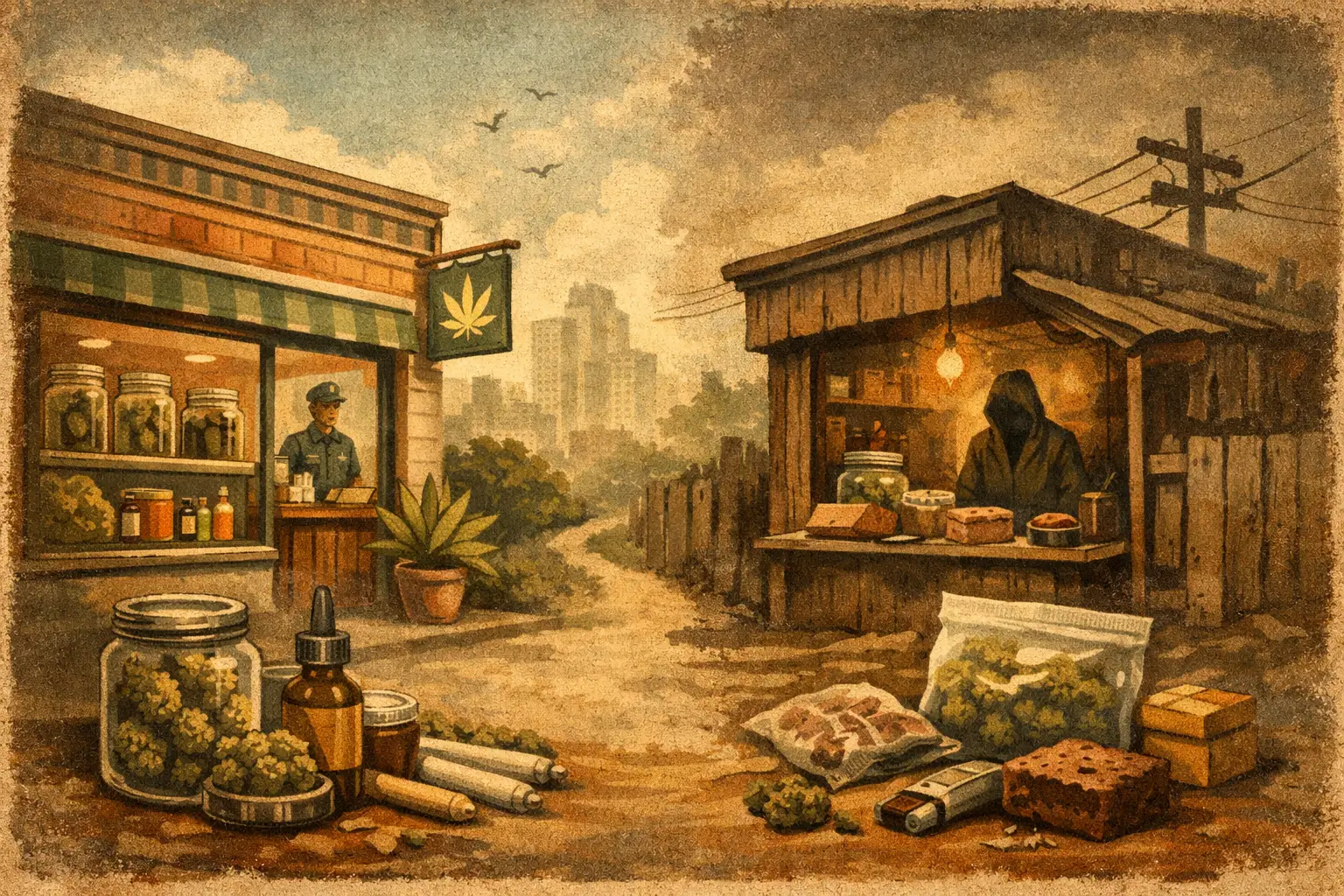
Licensed Versus Unlicensed Dispensaries in Ontario
A cannabis storefront can look polished, have a broad menu, and still not be part of Ontario’s legal retail system. That is why the difference between licensed versus unlicensed dispensaries matters before you place an order, share payment information, or rely on a product label. For adults 19+ in Ontario, a licensed retailer offers a regulated purchase path with verified sourcing, age controls, and clear accountability.
The practical question is not whether a store has appealing prices or a convenient location. It is whether the business is authorized to sell recreational cannabis in Ontario. Licensed dispensaries operate within a system overseen provincially by the Alcohol and Gaming Commission of Ontario (AGCO), with cannabis supplied through Ontario’s legal distribution framework. Unlicensed stores operate outside that framework, regardless of how familiar their branding or products may appear.
Licensed versus unlicensed dispensaries: the practical difference
A licensed cannabis retailer in Ontario has an AGCO retail store authorization. The business also needs the appropriate licensing to operate, and its store must follow rules on age verification, promotion, security, product handling, and sales practices. Legal recreational cannabis products are obtained through the Ontario Cannabis Store supply chain and originate from federally licensed producers.
An unlicensed dispensary has not received the required provincial authorization to sell recreational cannabis. This can include an unauthorized storefront, a pop-up operation, a website delivering products without legal retail authorization, or a seller using social media and messaging apps to arrange purchases. Some may use terms such as “legacy,” “compassion club,” or “grey market.” Those labels do not make a recreational cannabis sale legal in Ontario.
For a customer, the difference affects much more than compliance. It changes what you can reasonably know about the product, the seller, the transaction, and the recourse available if something goes wrong.
Why licensed stores provide a more reliable purchase process
Ontario’s legal retail system is designed to create a documented chain from producer to consumer. That does not mean every product will suit every person, or that every store will have the same service, stock, or pricing. It does mean the products are sold through an accountable channel with defined standards.
Product sourcing and labelling
Licensed stores sell packaged cannabis that has entered the legal supply chain. Products are required to carry regulated packaging and labelling, including information such as the cannabinoid content, net weight, lot number, packaging date, health warnings, and an excise stamp. This gives consumers useful details when comparing dried flower, pre-rolls, vapes, edibles, concentrates, beverages, and topical products.
Cannabis from an unlicensed source may not provide reliable information about potency, ingredients, or product origin. Packaging can be copied, altered, or designed to resemble legal products. A label alone is not proof that a product was produced, tested, stored, or transported within Canada’s regulated cannabis framework.
Testing is especially relevant with higher-risk product categories. Vape cartridges, concentrates, and infused products can vary significantly in ingredients and potency. A licensed retailer cannot remove every consumer risk associated with cannabis use, but it can offer products subject to the legal system’s production and labelling requirements.
Age verification and responsible retailing
Ontario’s legal minimum age for recreational cannabis is 19. Licensed stores are expected to verify age and cannot sell to anyone under that threshold. They also operate under restrictions intended to reduce youth access and prevent improper sales.
For some customers, being asked for identification may feel routine. It is still a meaningful sign that a retailer is following the basic obligations of legal cannabis sales. An operator that ignores age requirements is also showing that it may disregard other rules that protect consumers.
Clear business accountability
A licensed store has a physical, regulatory, and commercial identity that can be checked. You can confirm its location, operating hours, and authorization status before visiting. If there is an issue with a purchase, such as a product concern or an incorrect order, you have an identifiable retailer to contact.
Unlicensed sellers can disappear quickly, change names, move to a new account, or stop responding after payment. This is particularly relevant for online orders where the customer may have limited information about who is operating the site or where their personal data is being stored.
Price and selection are not the whole comparison
Unlicensed sellers often compete by advertising lower prices, unusually high potency, large quantities, or products that do not appear in licensed stores. Those offers can be tempting, particularly when a shopper is focused on a specific format or wants a low-cost option.
However, a lower listed price does not account for the value of verified sourcing, compliant age controls, reliable product information, and a known retailer. It may also not reflect the final cost once delivery fees, payment requirements, or missing customer support are considered.
Licensed stores are not identical, either. One Ontario retailer may focus on value flower and straightforward service, while another has a deeper selection of beverages, concentrates, or premium cultivars. Menu availability changes frequently, and prices can differ between nearby stores. Comparing licensed menus lets consumers find an option that fits their budget without leaving the legal market.
Payment options require common sense
Legal cannabis retailers may accept cash, debit, Interac e-Transfer, and, in some cases, cryptocurrency or other payment methods. Availability varies by store, so it is sensible to confirm payment options before travelling or placing an order. A directory such as OntarioCanna can help shoppers compare local store details, including payment information, alongside hours and menu access.
Payment method alone does not prove that a dispensary is licensed. A seller can request cash, e-Transfer, crypto, or a third-party payment service without holding an AGCO authorization. Treat payment flexibility as a convenience feature, not a compliance check.
When using e-Transfer or cryptocurrency, confirm the store’s identity before sending funds. Check that the business name, store address, and order process match the licensed retailer you intended to use. Be cautious with requests to send money to a personal account, use vague payment notes, or communicate only through an unverified social media profile.
How to verify a dispensary in Ontario
Verification takes only a few minutes and is worth doing, especially when trying a new store or ordering from an unfamiliar website. Start with the retailer’s name and address, not just its logo or social media handle.
Use these checks together:
- Confirm that the store appears in the AGCO’s public information for authorized cannabis retail locations.
- Match the listed address to the storefront or delivery retailer you plan to use. Similar names can cause confusion.
- Look for clear age-gating and a stated requirement that customers are 19+.
- Review whether the store provides normal business details, including hours, contact information, payment options, and a defined ordering process.
A retailer’s authorization status can change, so do not assume that an old search result or a recommendation from a friend is current. If something feels inconsistent - for example, a website claims to be a local store but has no matching address or asks for payment before giving basic business details - pause and verify before proceeding.
What to expect from a legal cannabis purchase
At a licensed Ontario dispensary, you should expect to show government-issued identification if staff need to confirm your age. Products should be sealed in compliant packaging, and the retailer should be able to provide a receipt. Staff may help you compare categories or explain label information, but they should not present cannabis as a treatment for a medical condition unless they are operating within the appropriate medical framework.
You should also expect reasonable limits. Licensed retailers cannot sell cannabis to minors, cannot make unrestricted promotional claims, and must follow Ontario rules around product display and sales. Those constraints can make legal retail feel more formal than an unregulated seller, but they are part of the consumer protections built into the market.
For first-time buyers, start with product information rather than marketing language. Check THC and CBD content, format, package size, and intended route of consumption. For experienced consumers, lot and packaging details can help support more consistent purchasing decisions when comparing similar products across stores.
Choosing convenience without compromising legitimacy
Ontario has licensed cannabis retailers in major cities and smaller communities, with options that may include in-store shopping, pickup, and local delivery where permitted. The right choice depends on what matters most to you: proximity, price, menu depth, payment method, or access to a particular product category.
The useful standard is simple: choose a store you can identify, verify, and contact. A legal purchase should not require guessing who is behind the counter, where the product came from, or whether the payment process will leave you without recourse. Checking a retailer before you buy is a small step that keeps convenience working in your favour.