

















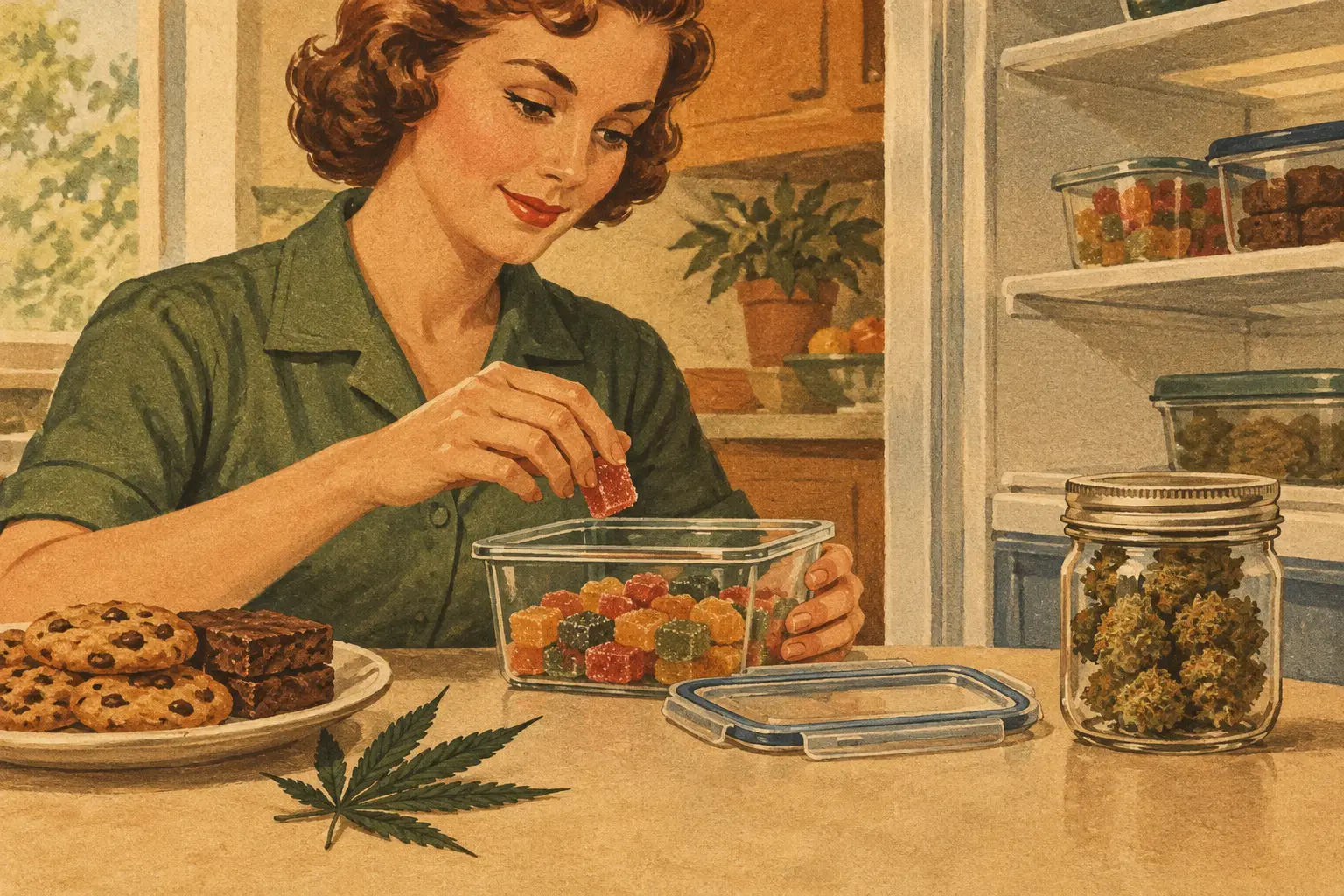
A cannabis gummy left in a warm car, a chocolate bar mixed into a snack drawer, or a drink stored beside ordinary beverages can create a preventable problem. Knowing how to store cannabis edibles properly protects product quality, makes dosage information easier to verify, and helps keep cannabis away from children, pets, and anyone who should not consume it.
For Ontario adults 19+, the starting point is simple: buy from an AGCO-licensed retailer, keep the product in its original child-resistant package, and follow the storage directions printed on the label. From there, the right storage method depends on the type of edible and the conditions in your home.
How to Store Cannabis Edibles for Safety and Freshness
Cannabis edibles should generally be stored in a cool, dry, dark location that is secure and out of reach of children and pets. A high cupboard, locked cabinet, or lockable storage box is usually more suitable than a kitchen counter, bedside table, purse, or car.
The original package is more than retail packaging. It carries the product name, THC and CBD amounts, lot information, warnings, and best-before details where applicable. If you move gummies, chocolates, or baked goods into an unlabelled container, it becomes easier to confuse them with regular food. That confusion is especially risky in homes shared with children, teenagers, visitors, or pets.
Choose a location that stays relatively stable. Heat can soften chocolate, melt gummies, and affect the texture of beverages or baked goods. Direct light may also reduce product quality over time. Moisture is another concern, particularly for products that can become sticky, stale, mouldy, or otherwise unsafe to eat.
A locked storage container offers an extra layer of control. This can be useful even when the product is stored in a high cabinet, since climbing children and curious pets can reach places adults assume are inaccessible. Keep the key or combination separate from the container.
Keep Edibles Separate From Everyday Food
The best storage location is one that reduces the chance of accidental consumption. Avoid placing cannabis edibles beside regular candy, granola bars, chocolate, or soft drinks. Even legal products with clear symbols and warnings can be mistaken for everyday food when they are stored loosely or removed from their packaging.
For households with more than one adult, set a clear rule about where cannabis products are kept. A designated locked bin or shelf prevents products from migrating into common kitchen spaces. It also makes it easier to find the package when you need to check dosage, ingredients, allergens, or expiry information.
This separation matters for pets as well. Dogs, in particular, may be attracted to sweet or fatty foods such as chocolate, cookies, and gummies. Cannabis can be harmful to animals, and some edible ingredients, including chocolate or xylitol, can add separate risks. If a pet consumes a cannabis edible, contact a veterinarian or pet poison service promptly and provide the package if available.
Storage Advice by Edible Type
The label on the package should always take priority, but different formats have different storage needs.
Gummies, Candies, and Lozenges
Most gummies and hard candies do well in a cool, dry cupboard away from sunlight. Keep the package tightly closed after opening. High temperatures can cause gummies to melt together, while humidity can affect texture and make individual pieces harder to separate.
Do not leave gummies in a vehicle. Ontario temperatures can change quickly through the year, and a parked car can become far hotter or colder than a product’s recommended storage range.
Chocolate and Baked Goods
Chocolate is particularly sensitive to heat. A cool cupboard may be enough during much of the year, but some homes become too warm in summer. Refrigeration can be an option if the label permits it, though chocolate can develop condensation or a pale surface bloom when repeatedly moved between cold and warm environments. That may affect appearance and texture even if the product remains usable.
Cannabis baked goods should be handled like other packaged food products. Check the label for storage instructions and dates, and do not assume that cannabis content makes a cookie, brownie, or other item shelf-stable. If refrigeration is required, store it in a clearly marked, secured container away from regular food.
Beverages
Cannabis drinks can usually be stored unopened in a cool, dark place unless the package says otherwise. Refrigerate them after opening if directed, and keep them clearly separate from non-cannabis drinks. An opened cannabis beverage placed in a shared refrigerator without its original label can be easy for someone else to pick up by mistake.
Oils, Capsules, and Other Ingestible Products
Although they are not always described as edibles, cannabis oils and capsules need similar care. Store them upright where possible, away from heat and light, and keep caps secured. Oils may leak in hot conditions, while capsules can soften or stick together when exposed to heat or humidity.
Should You Refrigerate or Freeze Cannabis Edibles?
Refrigeration is not automatically the best answer. It depends on the product and the manufacturer’s directions. Refrigerating a product that is meant for room-temperature storage can introduce moisture, alter texture, or make the package harder to manage if it is frequently opened and closed.
Use the refrigerator when the label requires it, when a perishable edible needs food-safe storage, or when room temperatures are consistently too high for a product such as chocolate. If you refrigerate cannabis edibles, keep them in the original package inside a locked or clearly designated container. They should not sit openly beside family snacks or drinks.
Freezing is usually a longer-term option rather than an everyday storage method. It may preserve certain products, but it can also affect texture and cause condensation during thawing. Freeze only when the package guidance supports it, and label the container clearly with the product name, cannabinoid content, and date stored. Never freeze loose, unmarked edibles.
Protect the Label, Potency, and Portion Information
A legal cannabis edible comes with regulated packaging and dosage information for a reason. Keep that information readable until the product is finished. This is particularly useful for multi-piece packages, where a single piece may contain less THC than the total amount in the package.
If you need to use a secondary container for practical reasons, such as preventing a package from being crushed, place the unopened original package inside it. Do not transfer individual pieces into a jar, lunch container, or plastic bag without retaining the label. The convenience is rarely worth the loss of safety information.
Before consuming an older product, inspect the package and contents. Discard it if there are signs of mould, unusual odour, leakage, damaged packaging, or a major change in appearance that is not expected for the product. When in doubt, do not consume it.
Transport and Temporary Storage
Cannabis edibles are easiest to manage when you bring home only what you can store securely. Keep purchases sealed in their original packaging during transport, and avoid leaving them in an unattended vehicle. Besides the temperature issue, visible cannabis products can attract unwanted attention or be accessed by passengers.
When travelling to a cottage, hotel, or another residence, bring a lockable storage option. A zipped bag alone is not secure storage, especially around children or pets. Keep products away from shared food areas and confirm that the original labels remain attached and readable.
A Practical Home Storage Routine
A reliable routine does not need to be complicated. Keep cannabis edibles in original packaging, place them in a cool and dark locked location, and separate them from ordinary food and beverages. Check labels before refrigerating or freezing, and review older products periodically for damage or spoilage.
For adult consumers buying through Ontario’s legal retail market, safe storage is part of responsible use. A few deliberate choices at home can preserve the product you paid for while reducing the chance that it ends up in the wrong hands.