

























A cannabis purchase can look similar at first glance: a product, a price, and a quick handoff. The practical differences between legal cannabis versus illicit cannabis in Ontario appear before and after the sale. They affect who is allowed to buy, what information comes with the product, how it was handled, and what options you have if something goes wrong.
For Ontario adults aged 19 and over, the legal market is built around licensed stores, regulated products, and clear purchase rules. The illicit market operates outside that system. Price can be part of the decision, but it should not be the only one.
Legal Cannabis Versus Illicit Cannabis: The Core Difference
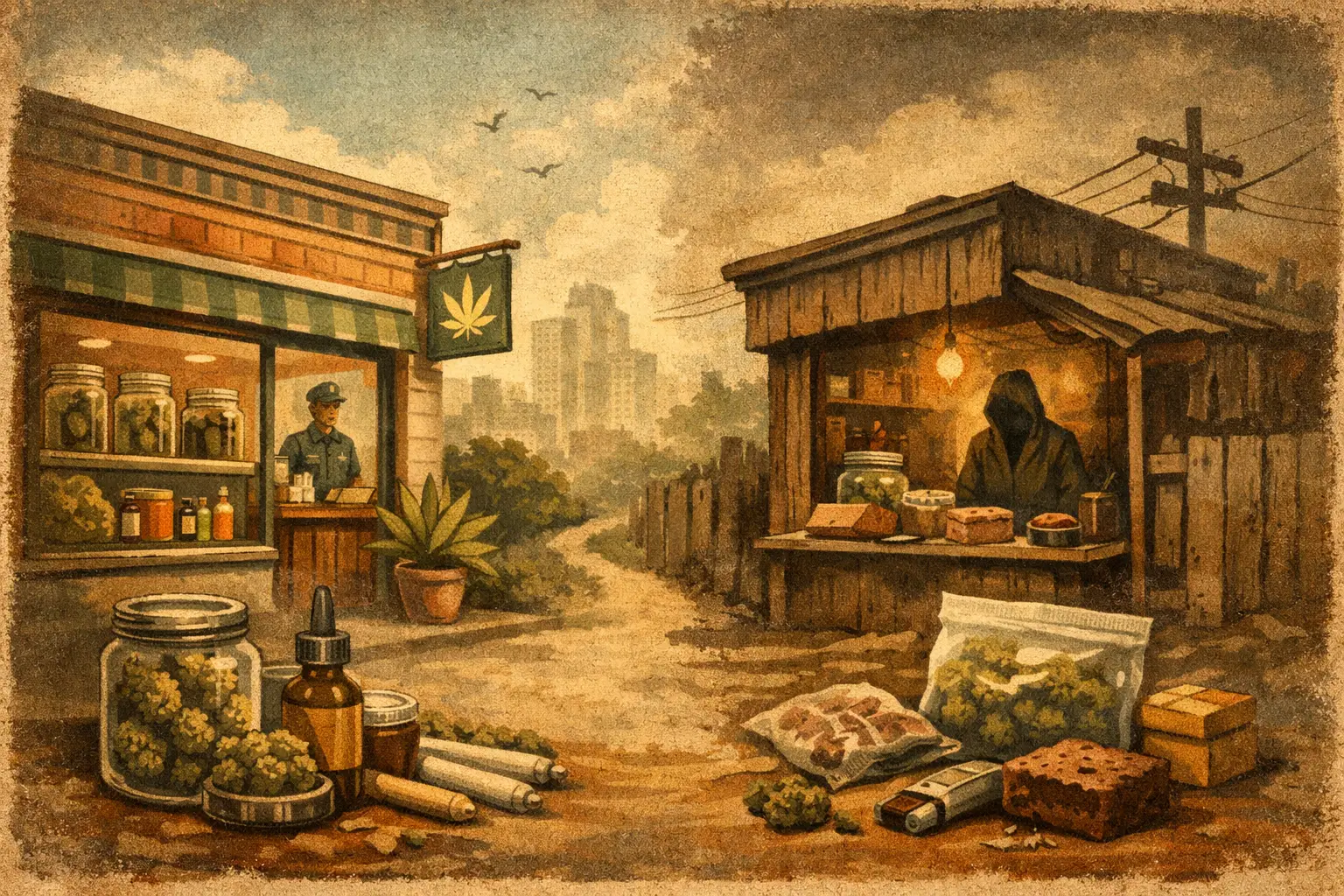
Legal recreational cannabis in Ontario moves through a regulated supply chain. Licensed producers must meet federal requirements, while the Alcohol and Gaming Commission of Ontario licenses and oversees authorized retail stores. Products sold through legal retailers are subject to rules on packaging, labelling, product limits, promotion, and age verification.
Illicit cannabis is sold outside those channels. It may be offered through an unlicensed storefront, an unverified website, a social media account, or an informal contact. A seller can use professional packaging or make claims about strains and potency, but that does not make the business licensed or the product regulated.
This distinction matters because legal retail is not simply about where a purchase happens. It creates a documented chain from producer to retailer and gives consumers a clearer basis for comparing products. You can review the label, ask staff about format and potency, and buy from a business that is accountable to provincial rules.
Product Safety Starts With Traceability
The strongest consumer difference is traceability. Legal cannabis products are packaged with required information, including THC and CBD content, lot details, a packaging date, warning statements, and producer information. That label will not tell you exactly how a product will feel, since individual responses vary, but it gives you a reliable starting point.
Regulated cannabis is also subject to testing requirements for contaminants and product quality. This does not mean every legal product will suit every consumer. Cannabis can still be too potent for a new user, have a flavour you dislike, or arrive drier than expected. The point is that the product was made and sold under a defined regulatory framework rather than without oversight.
With illicit cannabis, the origin and handling of the product may be unclear. A package can list a THC percentage or feature branding that looks familiar, yet there may be no dependable way to verify those claims. Product may have been stored improperly, repackaged, or misrepresented. Edibles are a particular concern because dosage is harder to judge when there is no reliable label or regulated serving format.
For a first-time buyer, this makes legal products easier to approach. Start with the displayed cannabinoid information, choose a format you understand, and avoid treating a strain name as a guarantee of a specific effect. For experienced consumers, traceable labelling makes it easier to compare a new product with one they have already tried.
Packaging Is More Than a Regulatory Detail
Legal packaging can feel excessive, especially compared with an informal purchase. However, child-resistant containers, warning labels, and standardized information serve a practical purpose. They reduce accidental access and help adults identify the product, its potency, and its source after they get home.
Keep cannabis in its original packaging when possible, store it securely, and make sure it is out of reach of children and pets. Legal cannabis should be treated as an adult product, not as an ordinary snack or household item.
Age Verification and Purchase Rules
Ontario’s legal age for recreational cannabis is 19. Licensed retailers are expected to verify age, whether you shop in person or order for delivery or pickup. An adult should be prepared to show valid government-issued identification when asked.
That can feel inconvenient when you are a regular customer, but it is a key protection in the legal system. Illicit sellers may skip age checks entirely, which is not a convenience worth treating as a benefit. Selling cannabis to minors is prohibited, and a retailer that treats identification seriously is showing that it follows the rules that protect customers and the broader community.
Legal purchases also come with clear possession limits. Adults may generally carry up to 30 grams of dried cannabis, or its equivalent in other cannabis forms, in public. The rules around consumption are separate from purchase rules. Buying from a licensed store does not make it legal to consume anywhere. Municipal restrictions, landlord rules, workplace policies, and impaired-driving laws still apply.
Selection, Information, and Staff Support
The legal market gives Ontario consumers access to a wide range of regulated formats. Depending on local inventory, this can include dried flower, pre-rolls, vapes, oils, capsules, edibles, beverages, concentrates, topicals, and seeds. Product availability changes frequently, so selection can differ between retailers and between cities.
The value of a licensed store is not only the shelf. Staff can help explain practical differences between product categories, THC and CBD ranges, package sizes, and consumption methods. They cannot provide medical advice or promise an outcome, but they can help a customer make a more informed retail choice.
An illicit seller may also offer variety, and sometimes makes stronger claims about rare strains, high potency, or bargain pricing. Those claims are difficult to assess without trusted product information. A recognizable strain name does not confirm genetics, quality, freshness, or cannabinoid content.
When comparing legal products, focus on the details that can actually be checked: format, package size, listed THC and CBD range, terpene information where available, packaging date, and total price. That approach is more useful than relying only on a product name or a menu description.
Is Legal Cannabis Always More Expensive?
Not necessarily. Legal cannabis includes taxes, regulatory costs, compliant packaging, testing, and licensed retail operations. In some categories, illicit cannabis may appear cheaper upfront. But the price comparison is incomplete if you do not know the actual potency, weight, freshness, or origin of what you are receiving.
The legal market has also become more competitive. Ontario retailers frequently carry value flower, multipacks, budget-friendly pre-rolls, and products at different price points. Comparing local menus can reveal meaningful differences in stock, package sizes, store promotions, and payment options.
Convenience has value as well. A licensed retailer provides clear store hours, a physical location or defined delivery process, a receipt, and a route for raising a product or service concern. With an illicit seller, a problem with an order may leave you with no dependable way to resolve it.
How to Recognize a Licensed Ontario Cannabis Store
A legal cannabis store should be licensed by the AGCO. In person, look for licensing information and professional age-verification practices. Online, pay attention to whether the store clearly identifies its Ontario location, provides contact details, explains pickup or delivery procedures, and presents products with regulated information rather than vague or exaggerated claims.
Be cautious with businesses that advertise cannabis without confirming age, promise unrestricted delivery, offer products that appear designed to appeal to children, or make claims that cannabis will cure conditions. Those are warning signs, not customer-service advantages.
A local directory such as OntarioCanna can help adults narrow their search to licensed Ontario retailers and compare practical details such as location, hours, menus, deals, and available payment methods. This is especially useful when you need to find a store nearby rather than sorting through unverified search results or social posts.
Payment Flexibility Does Not Replace Verification
Payment methods vary across legal cannabis retailers. Many stores accept debit, cash, and Interac e-Transfer, while some may offer other payment arrangements. Availability can depend on the retailer and whether you are shopping in store, ordering pickup, or using a delivery service.
Do not use payment method alone as proof that a seller is legitimate. Interac e-Transfer and cryptocurrency can be offered by both legitimate and illegitimate businesses. Verify the retailer first, then confirm the available payment options before placing an order.
Make the Practical Choice
Legal cannabis is not presented as risk-free cannabis. It still requires responsible use, secure storage, attention to dosage, and a firm commitment not to drive impaired. What legal retail provides is a more accountable purchasing environment: verified age controls, traceable products, regulated labelling, and licensed businesses that can be identified before you buy.
When you are ready to purchase, choose a licensed Ontario retailer, review the product label before opening it, and ask direct questions about format, potency, and payment. A few minutes spent verifying the store can make the entire purchase more predictable.