




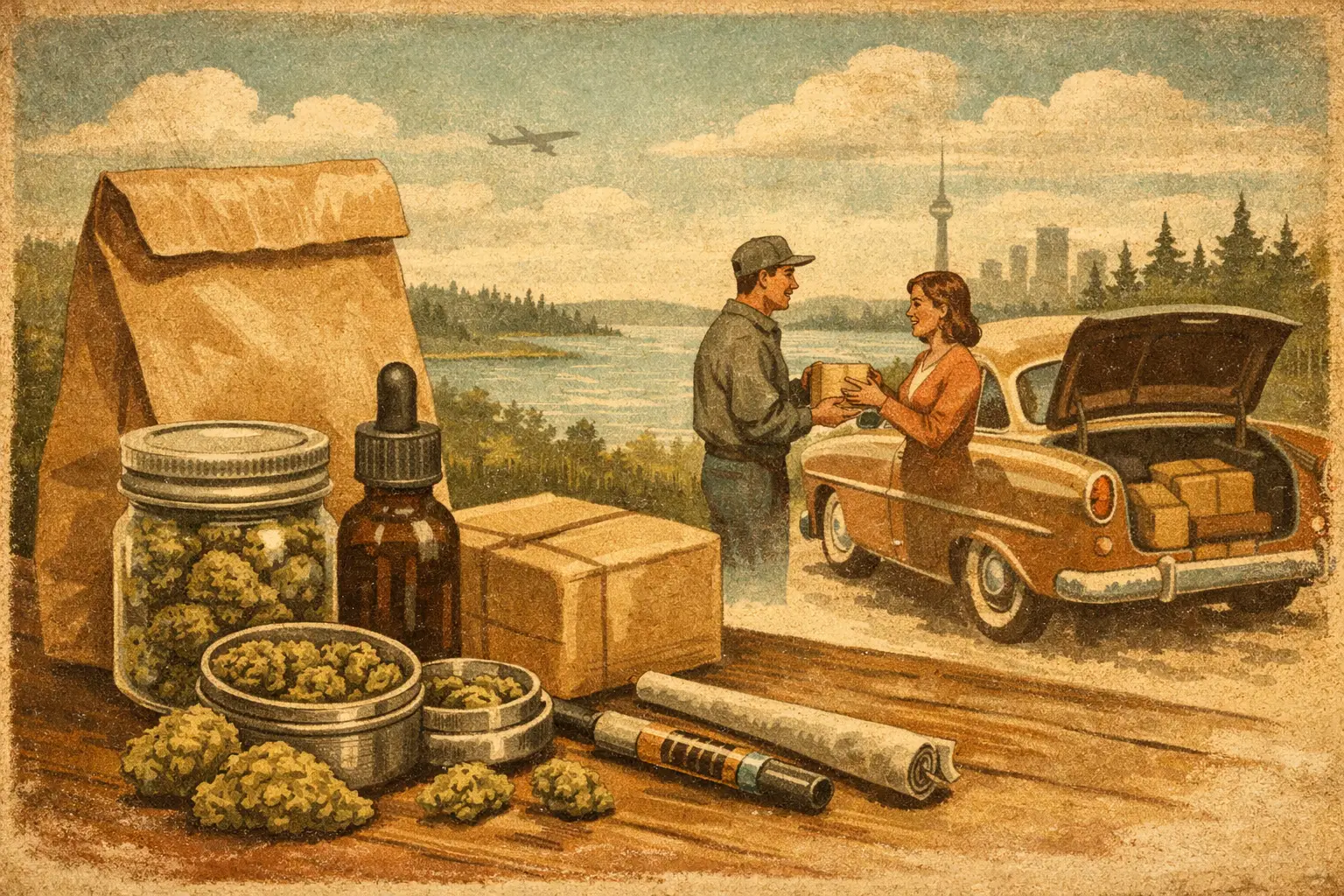


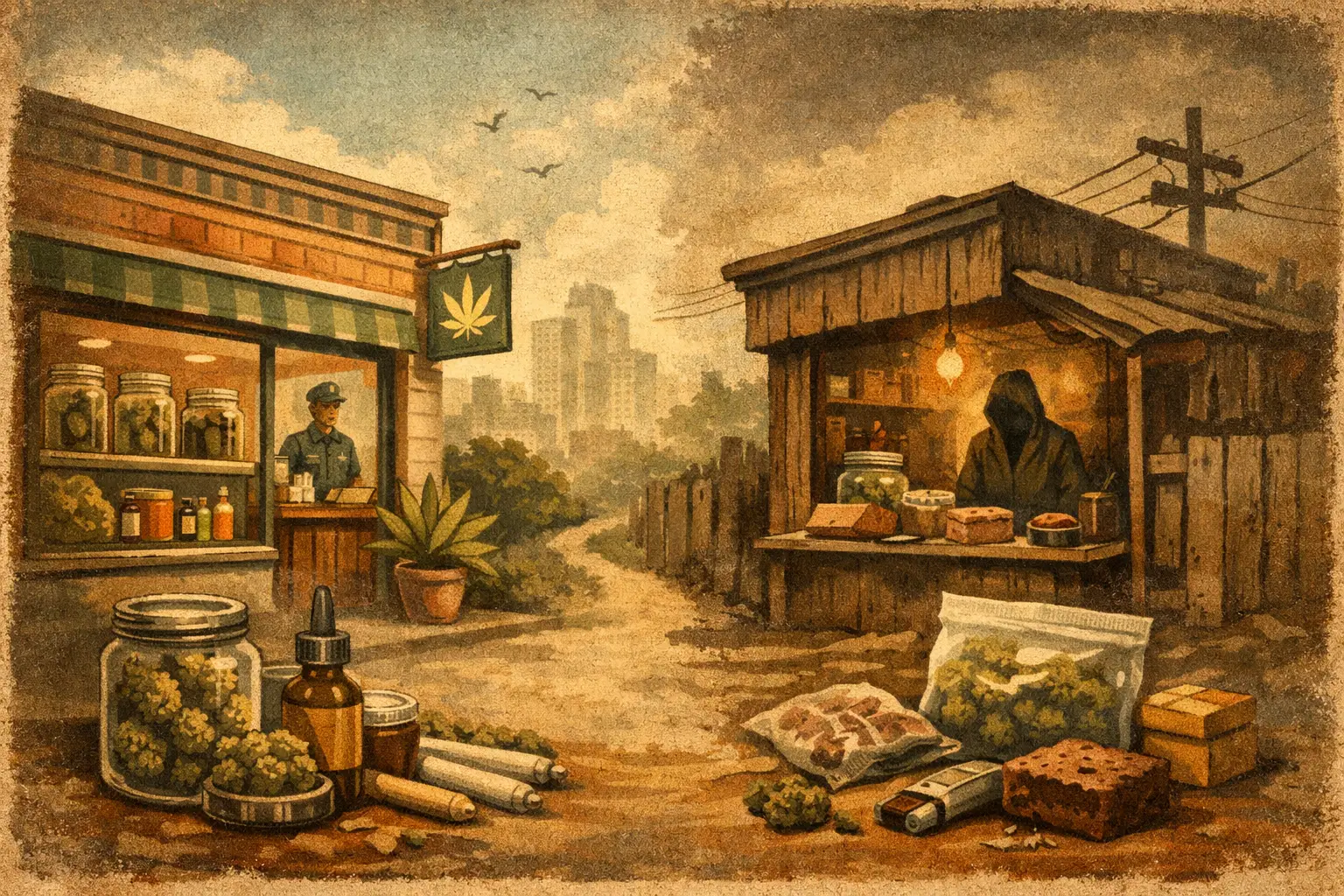
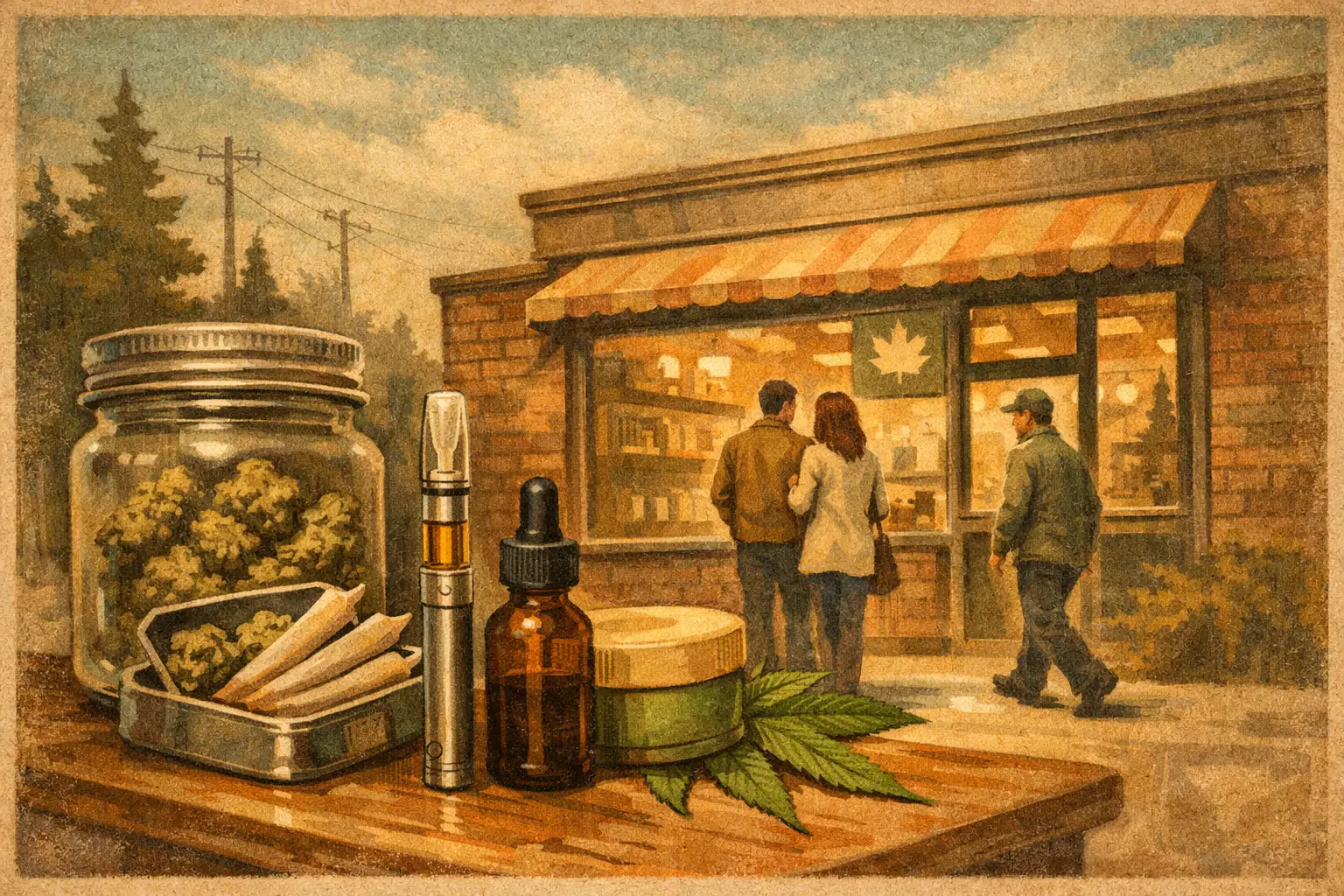









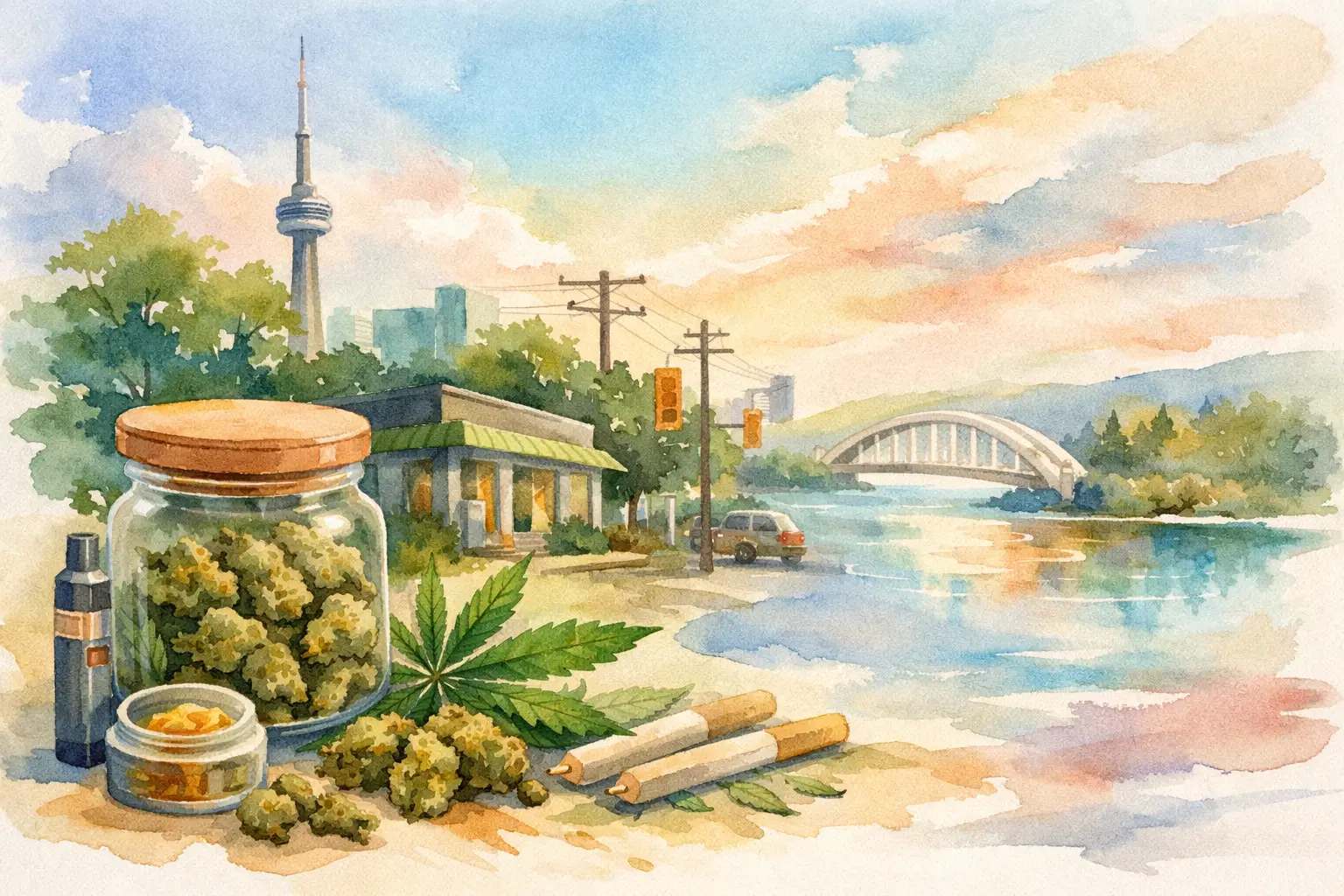
























A legal Ontario cannabis store is more than a place to buy dried flower. If you are wondering what cannabis stores sell, the short answer is regulated cannabis in several formats, along with selected accessories. The more useful answer is that each format works differently, has different onset times and strengths, and may suit different purchasing needs.
Licensed stores in Ontario can only sell cannabis products supplied through the province’s legal system. Product selection differs by retailer, so a downtown Toronto store may stock a wider range of beverages or concentrates than a smaller location, while another store may focus on value-priced flower and pre-rolls. Availability also changes often as products sell through and new lots arrive.
What Cannabis Stores Sell in Ontario
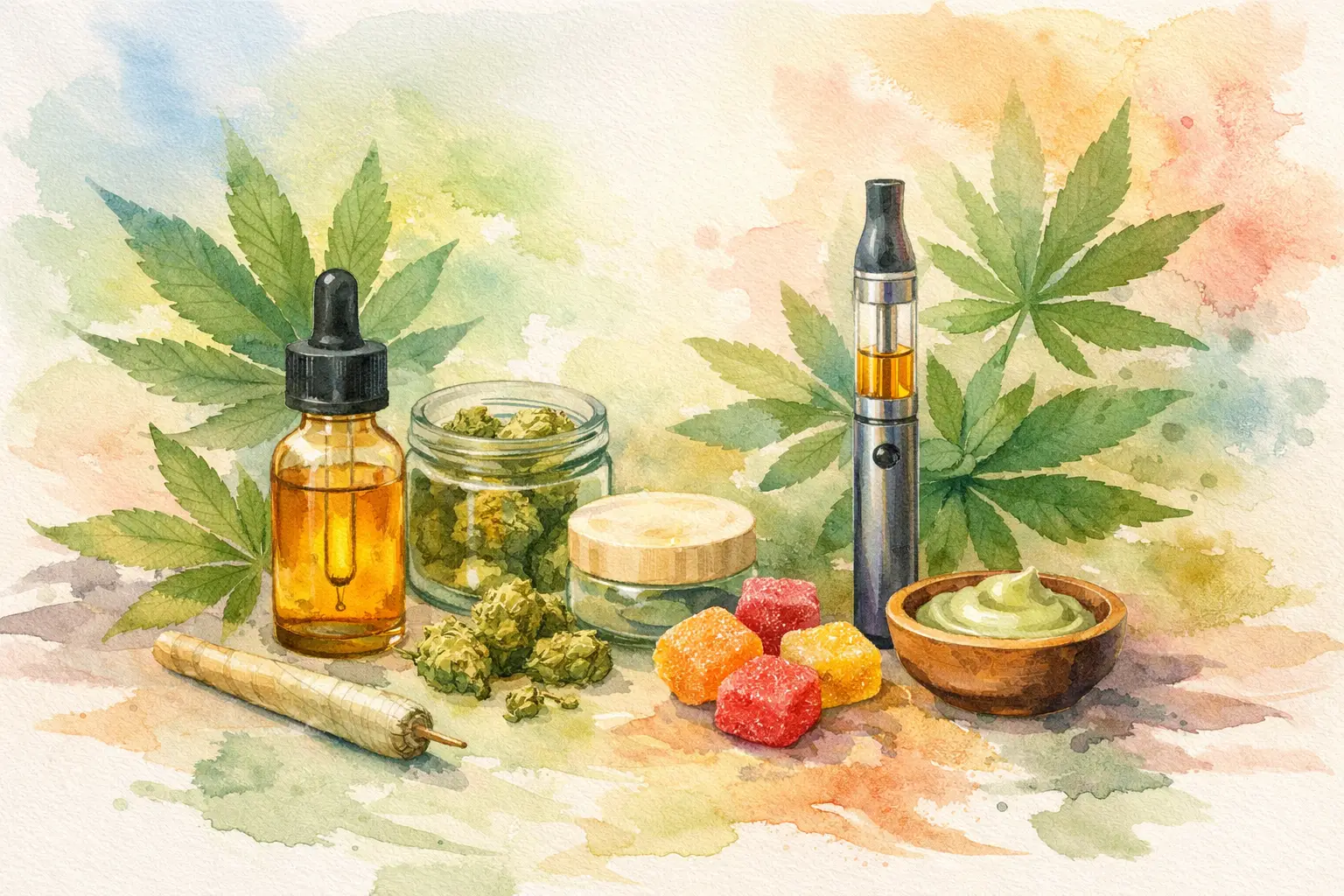
Ontario’s legal cannabis retailers commonly carry dried flower, pre-rolls, vape cartridges, edibles, beverages, oils, capsules, concentrates, topicals, seeds, and accessories. A licensed store may not have every category at all times, but these are the main product types adult consumers will find on a legal menu.
The legal market is designed around labelled, packaged products. Packages identify the producer, cannabinoid content, lot information, net weight, warning messages, and other required details. This gives consumers more product information than an unregulated purchase, although effects can still vary from person to person.
Dried flower
Dried cannabis flower remains one of the most common products at Ontario dispensaries. It is sold in sealed containers or pouches, usually in weights such as 1 gram, 3.5 grams, 7 grams, 14 grams, and 28 grams. Shoppers can choose products described as indica, sativa, hybrid, or cultivar-specific, but those labels are best treated as broad sorting tools rather than guarantees of a particular effect.
When comparing flower, check the THC and CBD ranges on the label, the package date, price per gram, and whether the product is whole flower or milled. Higher THC is not automatically better. A product with a more moderate THC range can be a more manageable choice for someone with limited experience.
Pre-rolls
Pre-rolls are ready-to-use joints filled with ground flower or infused cannabis. They are convenient for consumers who do not want to grind flower or roll their own. Stores often sell single pre-rolls, multi-packs, slim formats, and larger infused options.
The trade-off is that pre-rolls may cost more per gram than comparable loose flower. Infused pre-rolls can also have very high THC levels, so it is worth reading the label closely and starting cautiously if they are new to you.
Vape cartridges and disposable vapes
Cannabis stores sell vape cartridges that attach to compatible batteries, as well as disposable vape pens. These products contain cannabis extract and may be sold in a range of flavours and formulations. Many menus distinguish between distillate vapes, live resin vapes, full-spectrum extract vapes, and CBD-forward options.
Vaping is convenient and does not create the same odour as smoking, but device compatibility matters. A 510-thread cartridge requires a matching 510-thread battery, while proprietary pod systems require their own hardware. Ask store staff about the format before purchasing, particularly if you already own a battery.
Edibles and cannabis beverages
Edibles include gummies, chocolates, baked goods, lozenges, mints, and other food products containing cannabis. Cannabis beverages may include sparkling waters, sodas, teas, and drink mixes. These products are typically measured in milligrams of THC and CBD rather than grams.
Edibles can take longer to take effect than inhaled cannabis, often one to several hours. That delay is the main practical consideration. Avoid taking more because the first serving has not worked immediately. For new or occasional consumers, a low-dose product can make it easier to judge tolerance.
Oils, capsules, and sprays
Cannabis oils, softgels, capsules, and oral sprays are designed for measured dosing. They may contain THC, CBD, or a combination of both. Oils are usually taken orally or under the tongue according to the product directions, while capsules offer a consistent amount per unit.
These formats appeal to shoppers who do not want to smoke or vape. Effects can still take time, especially with swallowed products, and the right amount depends on the individual, the product, and whether it has been taken with food. Legal store staff can explain label information and product format, but they cannot provide medical advice or guarantee a therapeutic outcome.
Concentrates
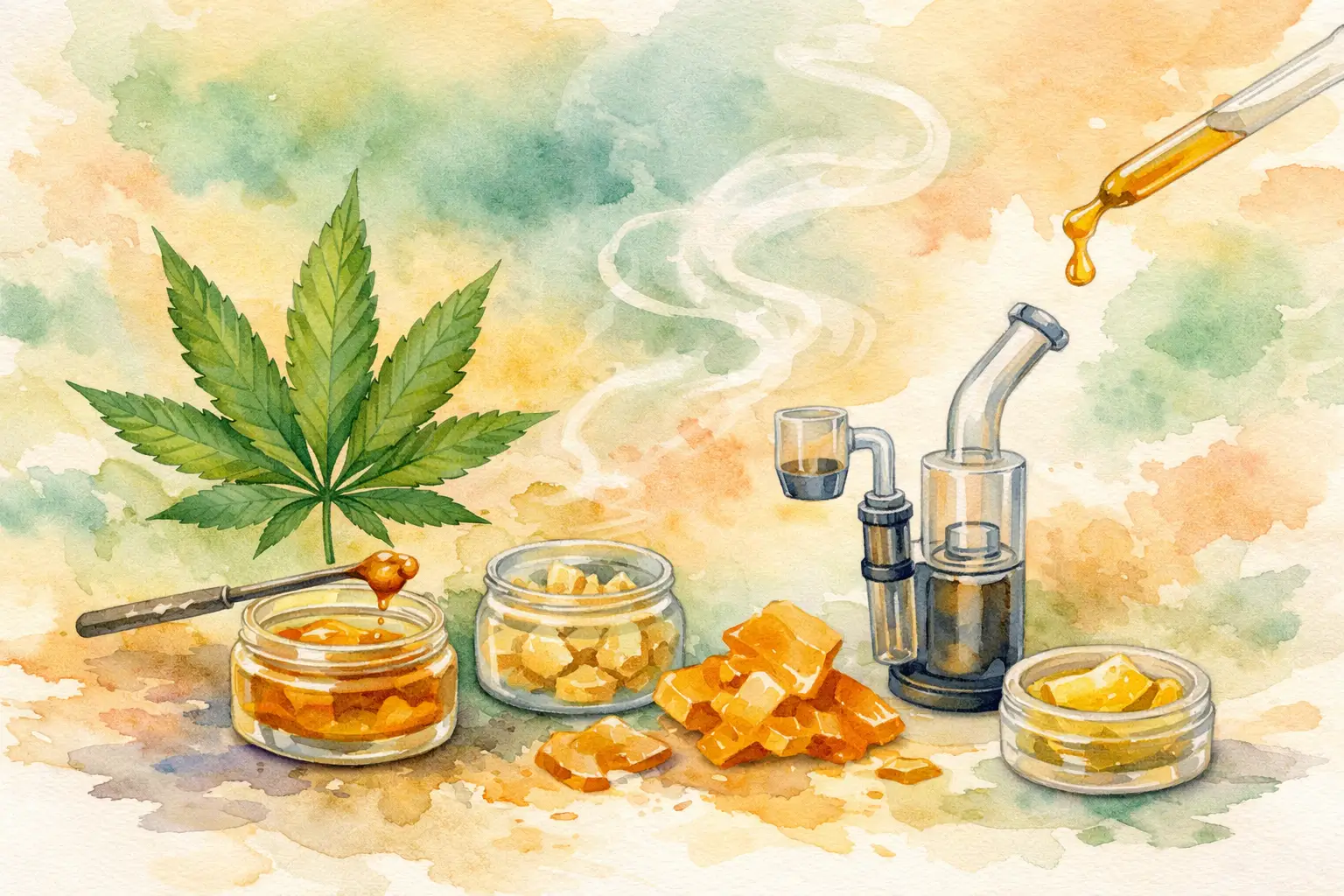
Concentrates are cannabis extracts that can include hash, kief, rosin, resin, shatter, wax, diamonds, and infused oils. They are often far more potent by weight than dried flower. Some are intended for use with specialized equipment, while others may be added to flower or used in a vape-compatible format.
This category is usually better suited to consumers who understand potency and their equipment. If a product requires a dab rig, electronic vaporizer, or another specific device, factor that into the purchase before choosing it. A low price on a concentrate is not necessarily useful if you do not have a safe, compatible way to use it.
Topicals and seeds
Topicals include creams, balms, bath products, and transdermal products applied to the skin. Product labels explain the cannabinoid content and intended method of use. As with all cannabis products, avoid treating retail descriptions as medical claims.
Some licensed Ontario stores also sell cannabis seeds. Seeds are intended for adults who want to grow cannabis within the rules that apply to personal cultivation. In Ontario, adults may generally grow up to four cannabis plants per residence, subject to applicable restrictions such as rental agreements, condominium rules, and local safety requirements.
Accessories You May Find at Cannabis Stores
Many cannabis retailers also carry practical accessories. Selection varies, but common items include grinders, rolling papers, cones, pipes, bongs, storage containers, humidity packs, 510-thread batteries, chargers, and cleaning supplies. A store may also stock smell-resistant cases or basic carrying options.
Accessories are not all interchangeable. A cartridge battery needs the right thread and voltage range, while a storage container should protect flower from excess air, heat, and light. If you are buying an accessory for a particular product, confirm compatibility at the counter rather than assuming a universal fit.
What Licensed Stores Do Not Sell
Legal cannabis stores are not general convenience stores. They cannot sell alcohol, tobacco, nicotine vape products, unregulated cannabis, or products outside Ontario’s authorized cannabis supply chain. They also cannot sell cannabis to anyone under 19.
A legitimate retailer will ask for identification when needed and follow rules around product display, packaging, and sales. Be cautious with any business offering cannabis without age verification, sealed labelled packaging, or clear licensing information. Legal status protects consumers through regulated sourcing, tested products, and accountable retail practices.
Purchase Limits and Practical Shopping Rules
Adults 19 and older can purchase cannabis from AGCO-licensed stores in Ontario. The limit is based on possession equivalents: an adult may carry up to 30 grams of dried cannabis or its equivalent in public. This matters when buying several formats at once, since cannabis flower, edibles, beverages, and concentrates are converted into equivalent amounts under federal rules.
For example, one gram of dried cannabis is equivalent to 15 grams of edible product, 70 grams of liquid cannabis product, 0.25 grams of concentrate, or one cannabis seed. Store systems account for these limits, but knowing the rule helps when building a larger order.
Product use has rules too. Do not drive while impaired, and keep cannabis secured away from children and pets. Consumption restrictions can vary by setting, municipality, landlord, workplace, or condominium policy. Buying legally does not mean every place is a permitted place to consume.
When comparing stores, start with the category you want, then look at available sizes, THC and CBD information, package dates, and payment methods. Some Ontario retailers accept cash and debit, while payment options such as Interac e-Transfer or cryptocurrency may vary by location. A verified directory such as OntarioCanna can help narrow the search to licensed retailers in your area.
The best purchase is not always the strongest or the cheapest item on the menu. Choose a legal store, read the label, select a format that fits your experience and plans, and give yourself time to understand how that product affects you.