











































A dispensary can look legitimate without being licensed. A polished website, familiar product photos, and a local delivery promise do not confirm that a retailer is permitted to sell cannabis in Ontario. That is why licensed dispensaries matter: they give adults 19+ a regulated way to buy cannabis with clearer product information, verified access, and meaningful consumer protections.
For most shoppers, the practical question is simple: can I trust this store with my purchase, payment, and personal information? In Ontario, an AGCO-licensed retailer is part of the province's legal cannabis system. That status affects where products come from, how they are handled, who can buy them, and what recourse consumers have when something goes wrong.
Why licensed dispensaries matter for Ontario buyers
A legal retail store does more than put cannabis on a shelf. It operates under provincial rules designed to control the sale of cannabis to adults, prevent diversion to minors, and maintain a traceable supply chain. Licensed retailers must meet requirements around age verification, store operations, security, recordkeeping, and product sourcing.
That structure removes a major source of uncertainty. When you buy from a licensed Ontario dispensary, you know the cannabis has entered the store through the authorized provincial distribution system. Products are packaged and labelled for the legal market, rather than being sourced through an unknown supplier or delivered with no dependable information about origin, handling, or contents.
This does not mean every store has identical prices, selection, or service. One location may focus on value ounces and another on premium dried flower, beverages, vapes, or pre-rolls. The value of licensing is the baseline: every legitimate store begins from the same legal framework, even when their menus and shopping experience differ.
Product labels support better decisions
Legal cannabis packaging provides information that helps shoppers compare products before they purchase. Depending on the category, labels can identify THC and CBD content, package size, lot information, producer details, ingredients, and relevant warnings. This is especially useful for consumers choosing between products with different potency ranges or formats.
Cannabis in the legal supply chain is subject to federal quality controls, including testing requirements for regulated products. That is not a promise that any product will suit every person. Cannabis affects people differently, and higher THC does not automatically mean a better experience. It does mean buyers have standardized information that is far more useful than a strain name and an unsupported potency claim.
Licensed store staff can also help customers understand product formats, label basics, and responsible-use considerations. They cannot diagnose conditions or replace medical advice, but practical retail guidance can reduce avoidable mistakes, such as buying a high-potency edible when a low-dose option would better match a shopper's experience level.
Legal access starts with age verification
In Ontario, recreational cannabis is for adults aged 19 and older. Licensed dispensaries are required to verify age and cannot sell to minors. Some shoppers see ID checks as an inconvenience, particularly when they are clearly well over 19. In reality, consistent age verification is one of the clearest signs that a retailer takes its obligations seriously.
The same principle applies to delivery and pickup orders. A compliant retailer should ensure that the person receiving cannabis is of legal age. If a seller treats this requirement casually, that should raise a concern about the rest of its operations as well.
Legal retailers also follow rules around where cannabis can be sold and how it is displayed. These requirements are not designed to make shopping complicated. They create a controlled retail environment where adult customers can make an informed purchase without normalizing access for minors.
Payment options should be clear and secure
Cannabis payments can be less straightforward than payments for everyday retail purchases. Some shoppers prefer cash or debit in store, while others look for Interac e-Transfer, online payment options, or cryptocurrency. Availability varies by retailer, location, and whether the order is for pickup or delivery.
A licensed dispensary should make its accepted payment methods clear before checkout. That helps prevent a common problem: placing an order, arriving for pickup, and learning that the store does not accept the method you planned to use. It also gives consumers a chance to decide whether they are comfortable with the payment process before sharing any information.
Payment flexibility is useful, but it should never be the only reason to choose a retailer. A store advertising e-Transfer or crypto still needs to be properly licensed, transparent about its process, and clear about order confirmation. For crypto payments in particular, buyers should check the store's current policy, payment timing, and refund approach before sending funds, since transaction handling can differ between retailers.
Licensed stores are accountable to the system
When a purchase from a legal retailer does not go as expected, there is an identifiable business behind the transaction. The store has a physical location or authorized retail operation, a licence, documented policies, and obligations under Ontario's cannabis framework. That accountability matters for issues such as incorrect orders, unopened product concerns, delivery questions, or payment disputes.
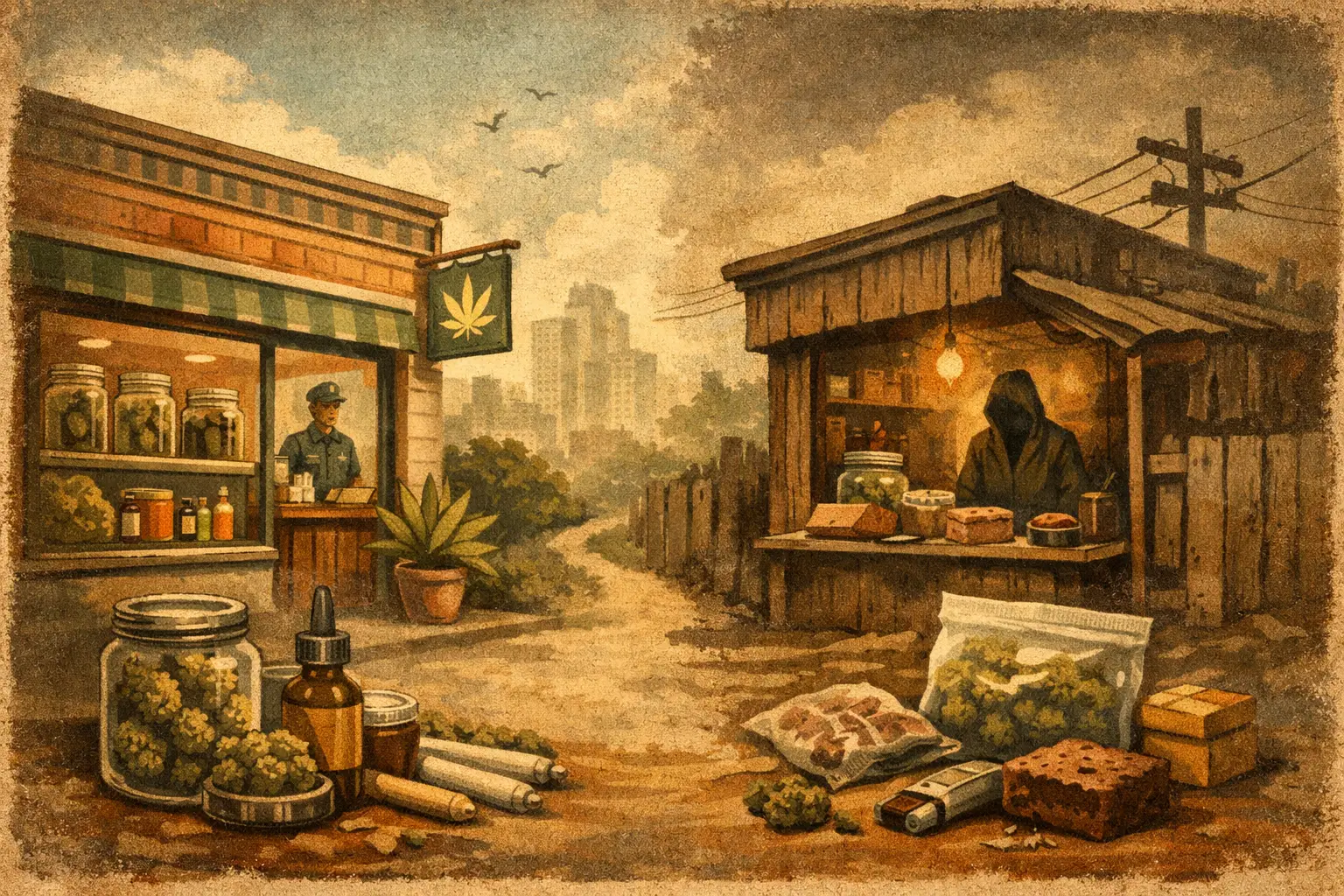
Unlicensed sellers often operate with far less transparency. Their contact details may be incomplete, their listed address may not correspond to a real storefront, and their product claims may be difficult to verify. If an order never arrives or a product appears questionable, a consumer may have little practical ability to resolve the problem.
Licensing is not a guarantee that every interaction will be perfect. Stores can still make inventory errors, experience delivery delays, or have staff who are less knowledgeable than expected. The difference is that a legal retailer operates within a framework that requires it to be identifiable and compliant, rather than disappearing when there is a problem.
How to identify a licensed Ontario dispensary
Finding a legal store should not require guesswork. Start with the retailer's licence status and look for consistent business details across its storefront, ordering system, and public listings. A legitimate shop should clearly identify its location, operating hours, contact information, and purchasing process.
Be cautious when a seller makes claims that do not fit Ontario's regulated market. Deeply unrealistic prices, vague product descriptions, no age gate, no clear business address, and pressure to pay through an informal channel are all reasons to pause. A professional-looking social media account is not proof of a cannabis retail licence.
Local directories can make the search more efficient by organizing licensed dispensaries by city, neighbourhood, store hours, menu access, delivery availability, and payment options. OntarioCanna is built around that practical need: helping Ontario adults compare verified local access without sorting through unlicensed results.
Compare stores based on the details that affect your order
Once you have confirmed that a dispensary is licensed, compare the factors that matter for the way you shop. For a quick pickup, hours, distance, stock availability, and accepted payment methods may be the priority. For delivery, check service areas, minimum-order rules, identification requirements, and expected delivery windows.
Menu depth matters too, but the best store depends on what you actually plan to buy. A shopper looking for low-dose edibles may not benefit from the same retailer that appeals to someone comparing dried flower formats. Check the current menu rather than relying on an old review or a product listing found elsewhere.
Price deserves context. A lower sticker price can be worthwhile, but only if the item is in stock, the package size is clear, and the retailer's pickup or delivery terms work for you. Looking at final order details before payment is a simple way to avoid surprises.
A safer choice is usually the easier choice
Ontario's legal cannabis market gives adult consumers a practical alternative to uncertain sellers. Choosing a licensed dispensary means choosing products from a regulated supply chain, a store that verifies age, payment processes that are explained upfront, and a business that can be identified if support is needed.
Before your next purchase, take a minute to confirm the store's licence status, current hours, menu availability, and payment options. That small check makes it easier to buy cannabis legally, confidently, and on terms that fit your neighbourhood and your order.